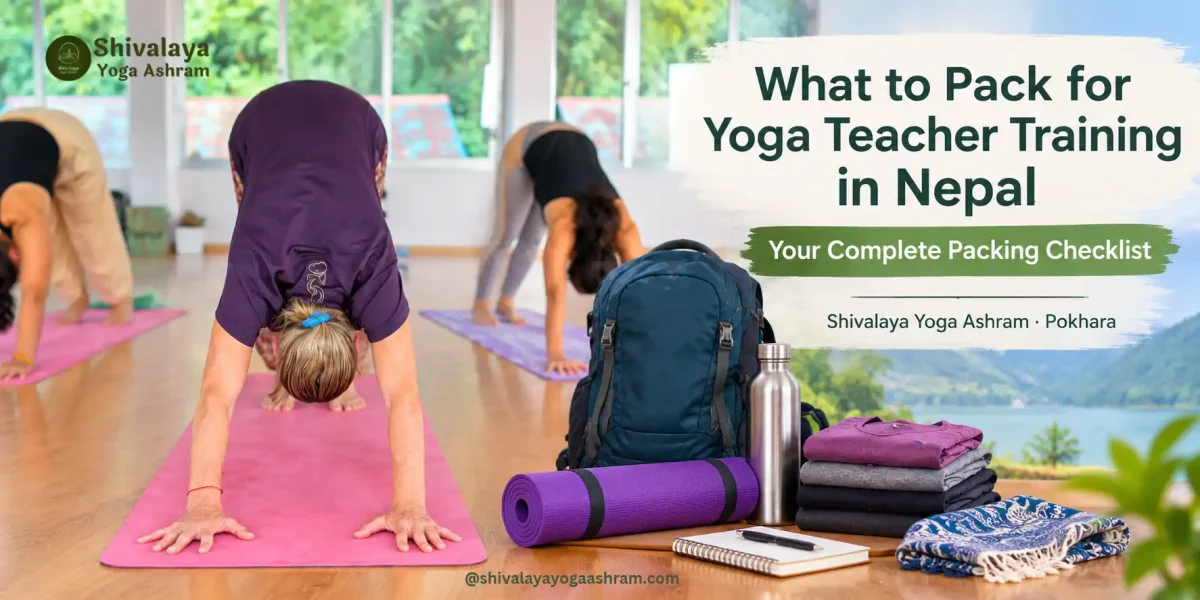
Essential Yoga Teacher Training in Nepal preparations include yoga attire, footwear, personal care items, travel documentation, and a few key study materials. Seasonal packing should also be considered as Pokhara has warm summers, rainy monsoon and cool mornings during the winter.
Whether you are travelling from Germany, the UK, Australia, Israel, the USA or another country, packing smartly will help you settle into your training without carrying unnecessary luggage.
Daily yoga asana sessions, pranayama, meditation, yoga philosophy, anatomy, and teaching practice can all form part of a residential yoga teacher training programme. This is what you need your packing list to assist you with.
Here is a practical checklist to help you prepare for your yoga teacher training in Nepal.
1. Comfortable Yoga Clothes for Daily Practice
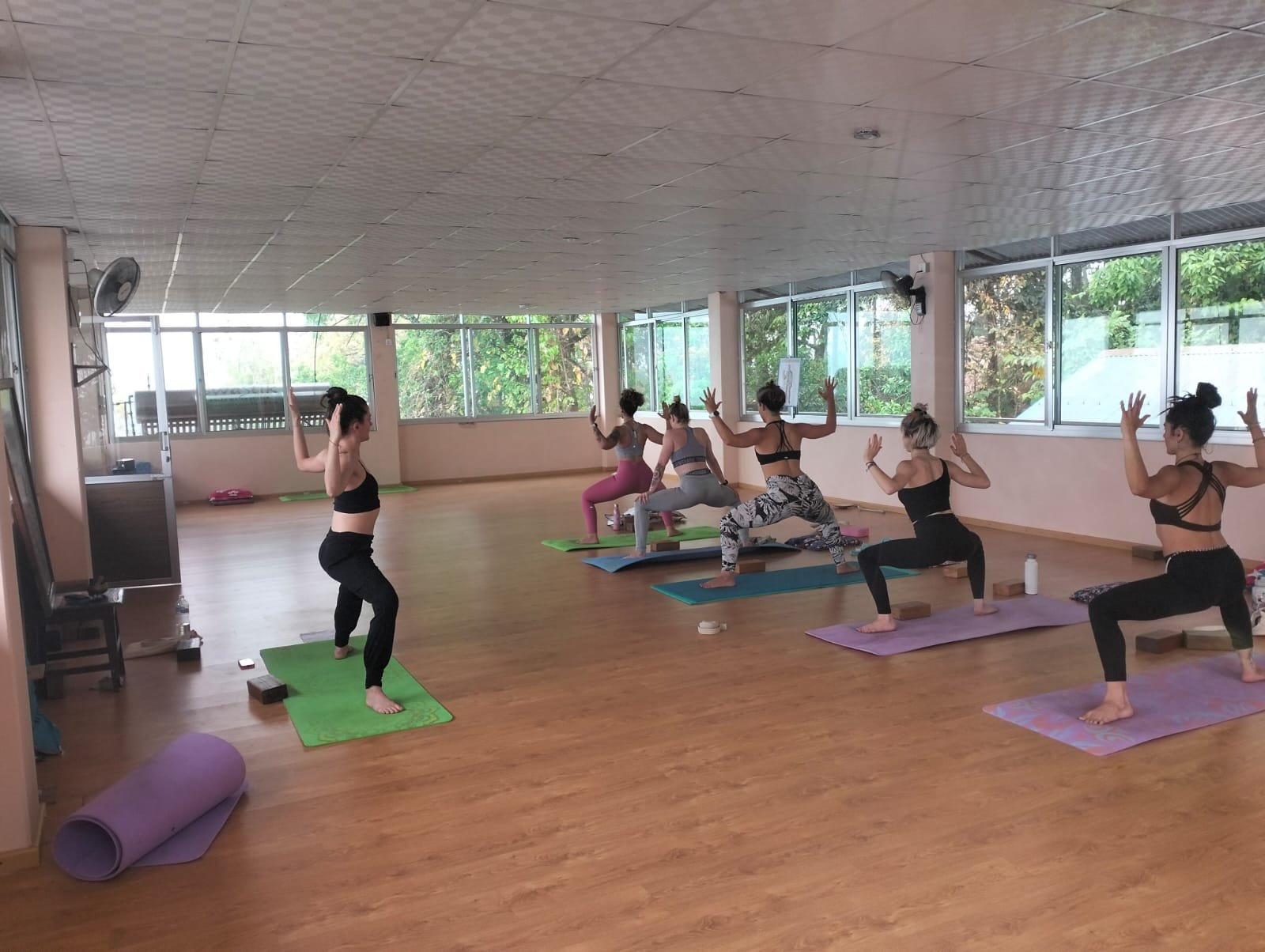
Yoga clothing is one of the most important parts of your packing list. You will spend several hours practising different postures, breathing techniques and meditation, so choose clothes that allow comfortable movement.
Consider packing:
- 4–5 pairs of comfortable yoga leggings or loose yoga pants.
- 4–5 breathable T-shirts or yoga tops.
- 2–3 comfortable outfits for daily activities.
- 1–2 long-sleeved tops for cooler mornings.
- Comfortable undergarments and socks.
- A light shawl or scarf.
Choose breathable, quick-drying fabrics that feel comfortable against your skin. Avoid clothing that restricts movement during forward bends, twists and standing postures.
How Many Yoga Outfits Should You Pack?
For a residential training lasting three to four weeks, around four or five practice outfits are a reasonable starting point if you have access to regular laundry. You do not need a separate outfit for every day.
Bring a few extra sets of comfortable clothes if you prefer to change after practice or do not expect to wash clothes frequently.
Clothes for Meditation and Study
Meditation and yoga philosophy classes do not require special clothing. Loose trousers, comfortable T-shirts and modest everyday outfits are usually suitable. Bring a shawl or light blanket if you prefer additional comfort while sitting for longer periods.
2. Essential Yoga Equipment to Bring
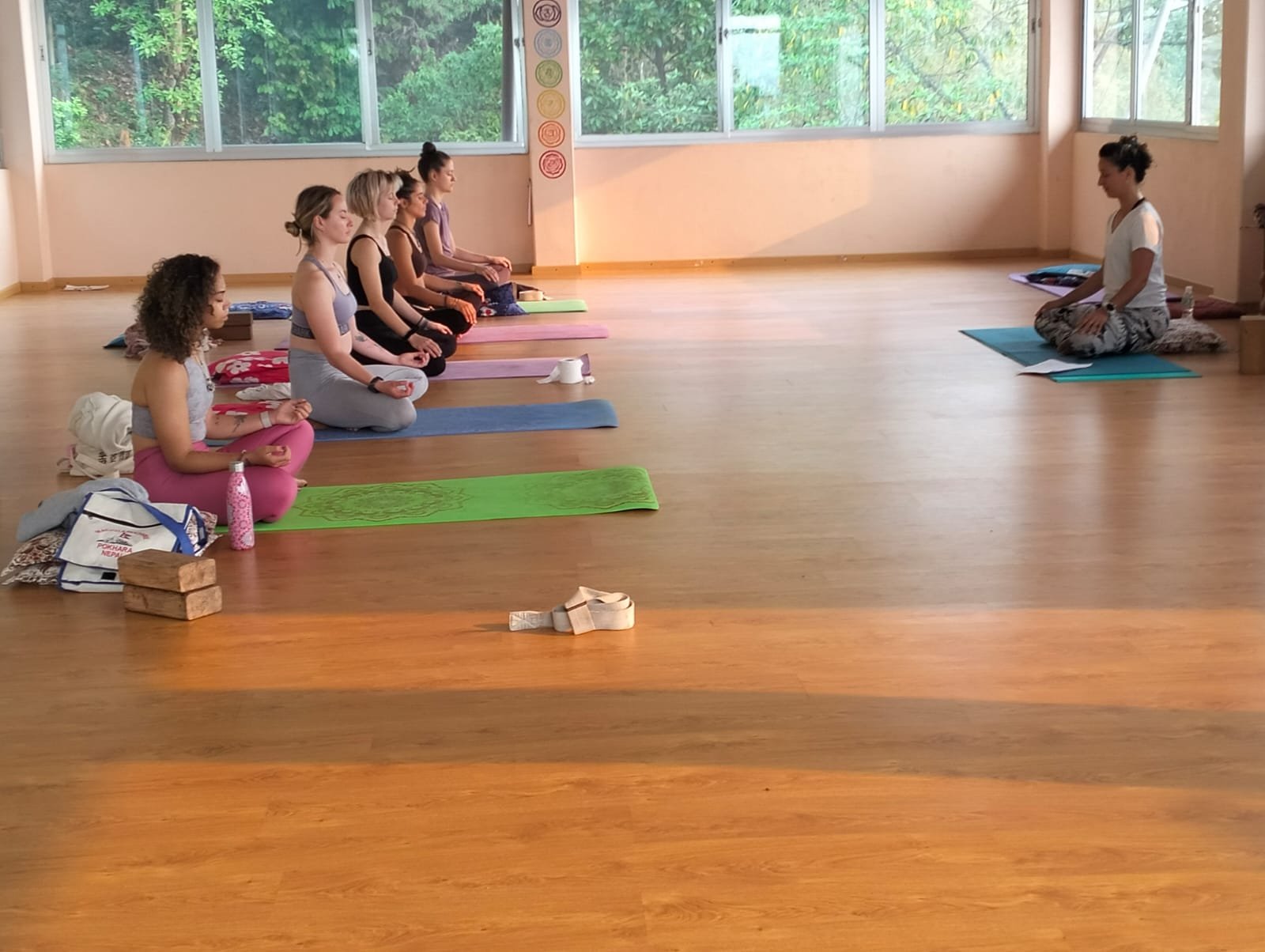
You do not need to carry a complete yoga studio in your suitcase. Focus on items that support your personal practice and check with your school before purchasing larger equipment.
Yoga Mat: A lightweight travel yoga mat is useful if you prefer practising on your own equipment. Before bringing one, confirm whether your training programme provides mats.
Yoga Mat Towel: A small quick-drying towel can help absorb sweat and keep your practice area comfortable.
Yoga Blocks and Straps: These props can support alignment and make certain postures more accessible. Bring personal ones only if you have specific preferences or requirements.
Meditation Cushion: A small cushion can make seated meditation more comfortable, particularly if you are not accustomed to sitting on the floor for extended periods.
Notebook and Pens: These are essential for recording yoga philosophy, anatomy, pranayama techniques, teaching instructions and feedback from your teachers.
A notebook is particularly useful during teaching methodology sessions, where you may need to record sequencing ideas and class-planning notes.
Preparing for Your Yoga Teacher Training in Nepal?
Choosing the right training programme is just as important as preparing your luggage. Explore the yoga teacher training programmes at Shivalaya Yoga Ashram near Begnas Lake, Pokhara, and find a course that matches your learning goals.
Also Read: Explore Yoga Teacher Training Programmes
3. Weather-Appropriate Clothing for Pokhara, Nepal
Weather preparation is especially important when travelling to Pokhara. The area around Begnas Lake experiences seasonal changes, so your clothing should match your training dates.
Packing for Spring and Autumn
Spring and autumn are popular periods for travelling in Nepal. Pack:
- Breathable cotton clothing.
- Comfortable yoga outfits.
- A light jacket or sweatshirt.
- Full-length trousers.
- Comfortable walking shoes.
- Sunglasses and sunscreen.
Layering is useful because mornings and evenings can feel cooler than afternoons.
Packing for Summer and Monsoon
If your yoga teacher training takes place during the warmer or rainy months, include:
- Quick-drying yoga clothes.
- A lightweight waterproof jacket or raincoat.
- An umbrella.
- Waterproof bags for electronics.
- Extra pairs of socks.
- Sandals that can handle wet conditions.
Humidity and rainfall can make clothes take longer to dry. Quick-drying fabrics are particularly useful during this period.
Packing for Winter
Winter mornings and evenings can feel cold, especially when you are sitting still during meditation.
Bring:
- A warm sweater or fleece jacket.
- Comfortable full-length trousers.
- Warm socks.
- A shawl or meditation blanket.
- A light insulated jacket.
- Comfortable layers for early morning practice.
You do not need a large winter wardrobe. A few warm layers are usually more practical than several bulky outfits.
4. Toiletries and Personal Care Essentials
Pack the personal care products you use regularly. Although basic products may be available in Pokhara, bringing familiar items can make your first few days easier.
Your toiletry bag should include:
- Toothbrush and toothpaste.
- Shampoo and conditioner.
- Soap or body wash.
- Deodorant.
- Sunscreen.
- Lip balm.
- Moisturiser.
- Insect repellent.
- Personal hygiene products.
- Quick-drying travel towel.
If you have sensitive skin or prefer particular skincare products, bring enough for your stay.
A small laundry bag is also useful for keeping worn yoga clothes separate from clean clothing.
5. Important Travel Documents for Nepal
Keep your travel documents organised and accessible. Do not pack all important documents in checked luggage.
Prepare the following:
- Valid passport.
- Nepal visa or relevant entry documentation, where required.
- Flight tickets and travel itinerary.
- Course confirmation or enrolment details.
- Travel insurance documents.
- Emergency contact details.
- Copies of important identification documents.
Visa requirements depend on your nationality. Most foreign visitors need a tourist visa, while Indian nationals do not require a visa to enter Nepal. Check the latest official entry requirements before departure.
Keep digital copies of important documents in a secure location and carry accessible offline copies as a backup.
6. Health, Medicines and Daily Essentials
Your personal health requirements should always be a priority when travelling internationally.
Pack:
- Prescription medicines for the full duration of your stay.
- A copy of your prescriptions.
- Basic first-aid supplies.
- Plasters and antiseptic wipes.
- Any personal medical supplies you regularly use.
- Reusable water bottle.
- Sunglasses and a sun hat.
Keep medicines in their original packaging where possible. Check airline and Nepal import rules for any medicines that require special documentation.
If you have an existing injury, medical condition or physical limitation, inform your yoga school before starting the programme. Your teacher can then understand your requirements and discuss suitable practice modifications.
7. What to Pack for Daily Life at a Yoga Ashram
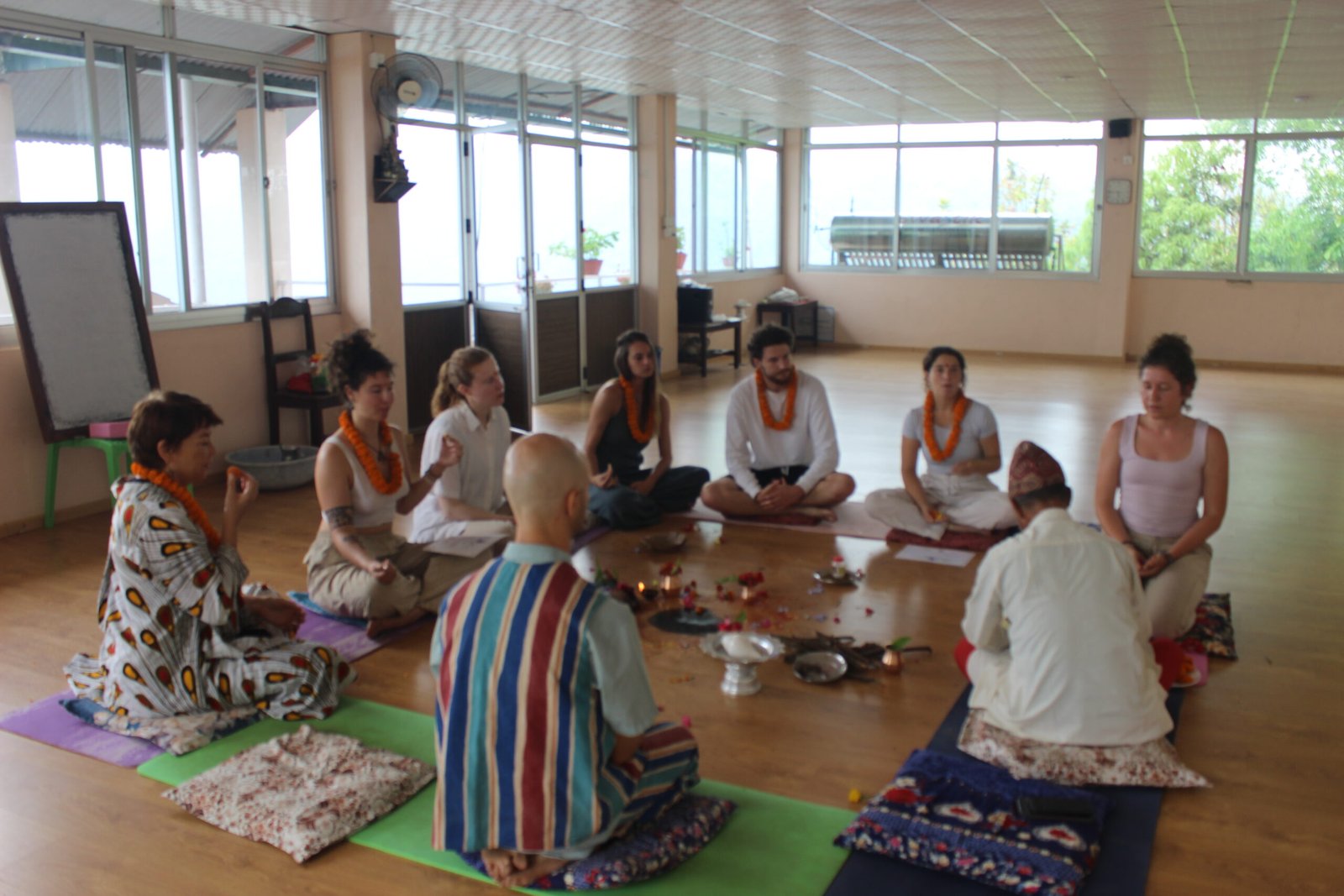
Life at a yoga ashram involves more than attending yoga classes. You may spend time studying, practising meditation, participating in group activities and enjoying the surrounding natural environment.
For your daily routine, consider bringing:
- Comfortable walking shoes or trainers.
- Easy-to-remove sandals or slippers.
- A small day backpack.
- Reusable shopping bag.
- Notebook and reading material.
- Phone charger and power bank.
- Universal travel adapter, if needed.
- Earplugs and an eye mask, if useful.
- A small torch for unexpected low-light situations.
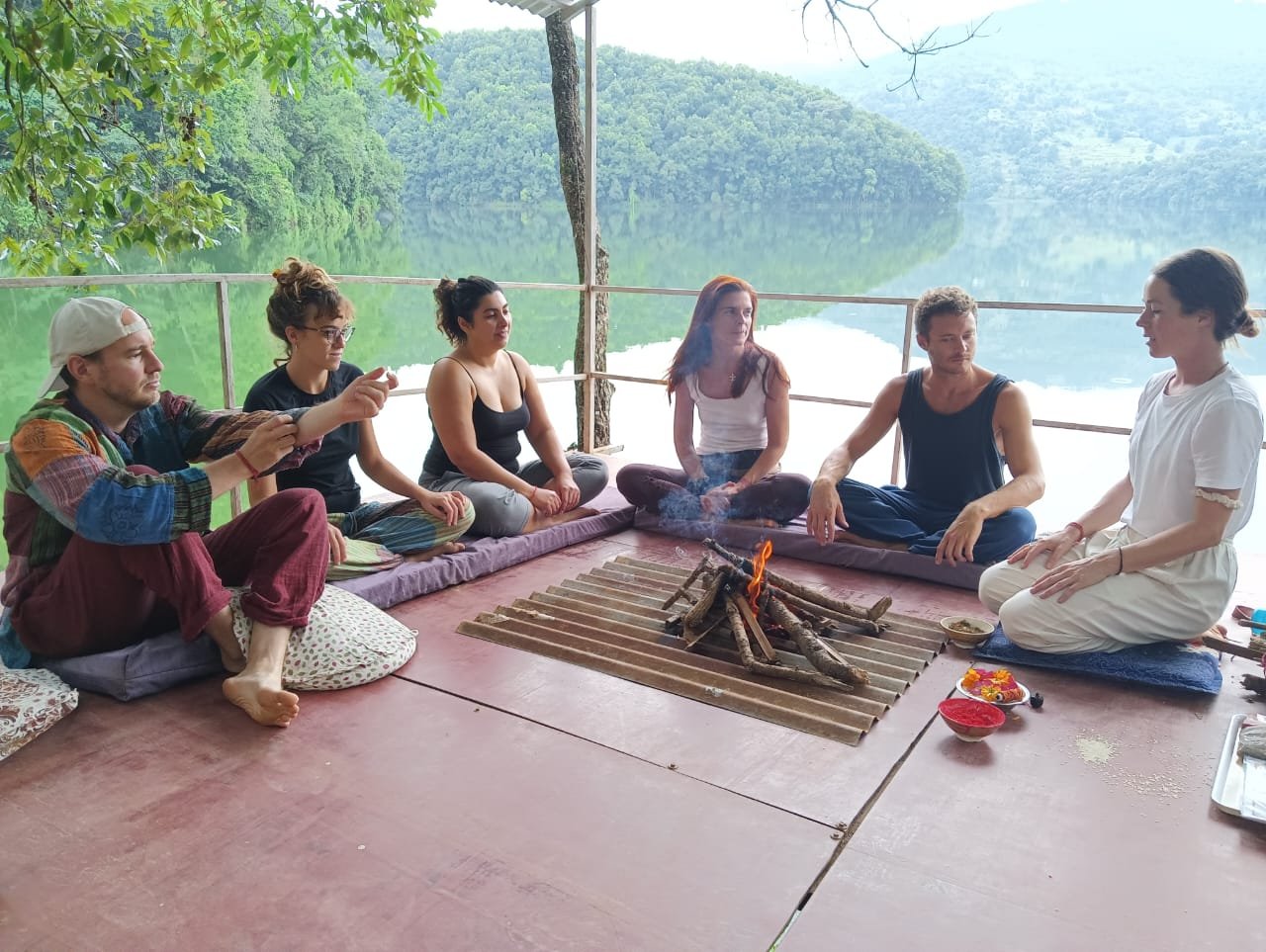
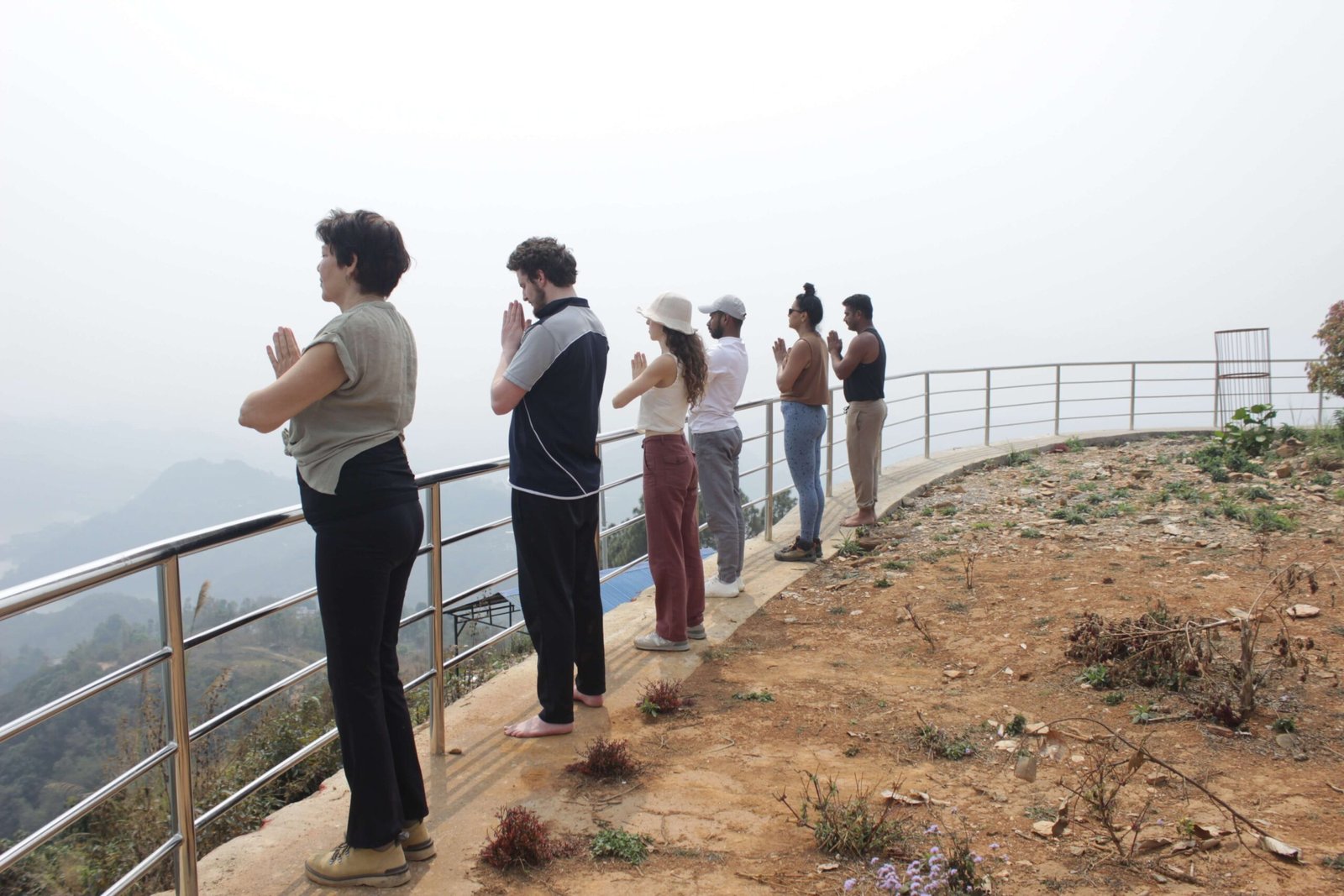
At Shivalaya Yoga Ashram, students practise and stay near Begnas Lake in Pokhara, Nepal. The natural surroundings make comfortable walking footwear and weather-appropriate clothing useful for time outside the practice space.
Before travelling, ask the ashram which facilities, study materials, bedding, towels and yoga equipment are included in your selected programme. This will help you avoid carrying items that are already provided.
8. What Not to Pack for Yoga Teacher Training
Overpacking can make international travel more difficult. A residential yoga course generally follows a simple routine, so you do not need to bring everything you might use on a regular holiday.
Avoid packing:
- Too many yoga outfits.
- Heavy exercise equipment.
- Unnecessary shoes.
- Expensive jewellery.
- Large quantities of toiletries.
- Bulky books that are available digitally.
- Unnecessary electronic gadgets.
You can also leave large yoga props at home if your school provides them.
The goal is to pack enough to remain comfortable without making your luggage difficult to manage.
9. Final Yoga Teacher Training Packing Checklist
Use this checklist before leaving for Nepal.
| Category | Packing Checklist |
|---|---|
| Yoga clothing | 4–5 practice outfits, casual clothes, warm layers |
| Yoga equipment | Travel mat if needed, mat towel, personal props |
| Study materials | Notebook, pens, reading material |
| Footwear | Walking shoes, sandals, slippers |
| Toiletries | Toothbrush, shampoo, sunscreen, skincare |
| Health | Prescription medicines, first-aid essentials |
| Travel | Passport, visa if required, tickets, insurance |
| Electronics | Phone, charger, power bank, adapter |
| Daily essentials | Water bottle, day backpack, laundry bag |
| Seasonal items | Raincoat, umbrella or winter jacket as required |
Before closing your suitcase, contact your yoga school and confirm what is already included in your course. A short conversation can prevent unnecessary purchases and help you prepare more confidently.
Frequently Asked Questions
1. How Many Yoga Outfits Should I Pack for a 200-Hour Yoga Teacher Training?
Pack around four to five yoga outfits for a residential 200-hour yoga teacher training. Choose breathable, comfortable clothing that allows unrestricted movement. You can wash and reuse your outfits during the course. Also bring a few casual clothes and warm layers for mornings and evenings.
2. Do I Need to Bring My Own Yoga Mat to Nepal?
Not necessarily. Some yoga schools provide yoga mats and basic equipment as part of their programmes. Check with your chosen school before travelling. If you prefer using your personal mat, consider bringing a lightweight travel yoga mat that fits easily into your luggage.
3. What Should I Wear at a Yoga Ashram in Nepal?
Wear comfortable, breathable and modest clothing. Yoga leggings, loose trousers, cotton tops and T-shirts are suitable for most daily activities. Carry a shawl or light jacket for meditation and cooler mornings. Choose clothing that allows comfortable movement during different yoga practices.
4. What Is the Weather Like in Pokhara, Nepal?
Pokhara experiences warm summers, a rainy monsoon season and cooler winter weather. The monsoon generally lasts from early June to early September. Winter mornings and evenings can feel cold, so bring layers. Check the local forecast for your exact training dates before travelling.
5. Can I Buy Yoga Essentials in Pokhara?
Basic travel supplies, toiletries, clothing and everyday essentials are available in Pokhara. However, specific yoga equipment, preferred skincare products and prescription medicines may be harder to find in your preferred brands. Bring personal essentials from home and confirm equipment availability with your school.
6. What Travel Documents Do I Need for Nepal?
International travellers should check Nepal’s current entry requirements according to their nationality. Depending on your passport, you may need a tourist visa, valid passport and supporting travel documents. Indian nationals do not require a visa to enter Nepal but should carry an accepted identity document.
7. Should I Bring My Own Yoga Props for Teacher Training?
You do not need to bring every yoga prop. Blocks, straps and other equipment may be available at your yoga school. Ask about the facilities before packing. If you have a personal meditation cushion or a specific prop that supports your practice, you can bring it.
8. What Should I Keep in My Hand Luggage When Travelling to Nepal?
Keep your passport, required travel documents, course confirmation, essential medicines, valuables, phone, charger and one change of clothes in your hand luggage. Follow your airline’s rules for liquids, batteries and medication. Keep digital and printed copies of important documents as backups.
Conclusion
Packing for yoga teacher training in Nepal does not need to be complicated. Focus on comfortable practice clothing, essential yoga equipment, personal medicines, important travel documents and suitable layers for Pokhara’s changing weather.
If you are preparing for a residential programme near Begnas Lake, Shivalaya Yoga Ashram offers an opportunity to study yoga in a natural setting while developing your understanding of traditional practices, meditation and yoga teaching.
Prepare for your training at Shivalaya Yoga Ashram. Explore the available Yoga Teacher Training Programmes in Nepal or contact the ashram to confirm course details and what you should bring before travelling.