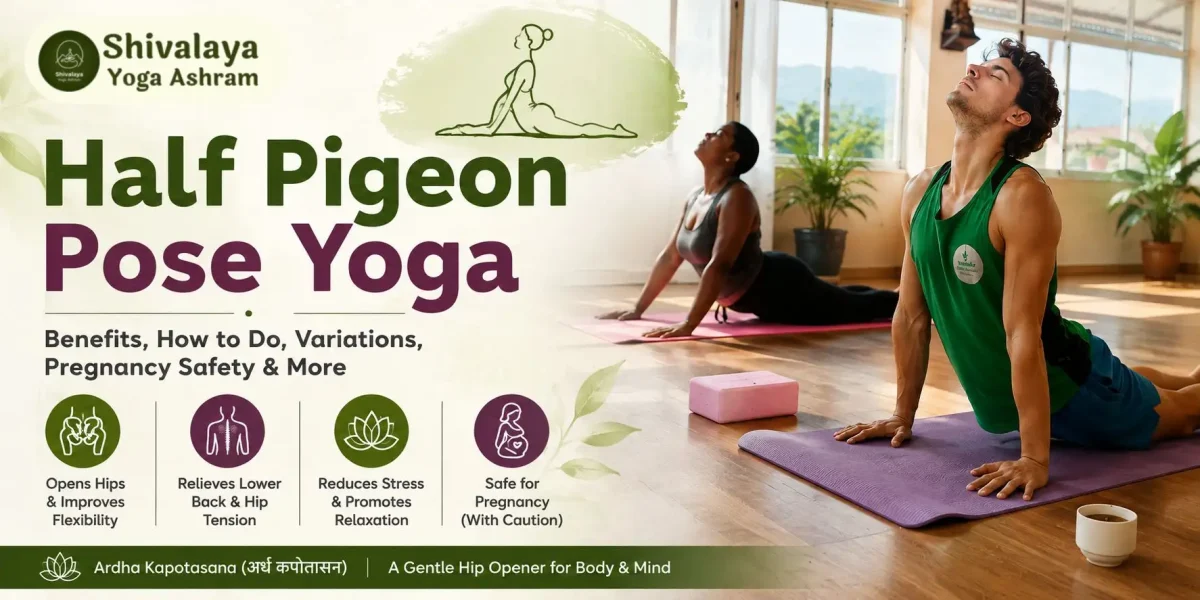
Half Pigeon Pose yoga is one of the most loved hip-opening yoga postures, known for improving flexibility, releasing built-up tension, and promoting relaxation. Whether you are just starting your yoga journey or have been practising for years, this pose offers a balanced combination of strength, stability, and mindfulness. It is commonly included in Hatha, Vinyasa, Yin, and restorative yoga classes because of its ability to stretch tight muscles while calming the mind.
Modern lifestyles often involve long hours of sitting, driving, or working at a desk, which can lead to stiffness in the hips and lower back. Practising Half Pigeon Pose regularly helps counter these effects by opening the hips, improving mobility, and encouraging better posture. It also prepares the body for deeper hip-opening poses, including Full Pigeon Pose. In this guide, you’ll learn everything about Half Pigeon Pose, including its Sanskrit name, benefits, correct technique, beginner-friendly tips, variations, pregnancy safety, and how it differs from the classic Pigeon Pose.
What Is Half Pigeon Pose yoga?
Half Pigeon Pose yoga is a seated hip-opening yoga posture that gently stretches the hips, glutes, hip flexors, thighs, and lower back. It is widely practised because it helps release tightness caused by prolonged sitting while improving flexibility and body awareness. Unlike more advanced backbends, this pose allows practitioners to work gradually on hip mobility without placing unnecessary strain on the body when performed correctly.
The pose is often introduced before Full Pigeon Pose because it builds the flexibility and stability needed for deeper hip openers. Besides improving physical mobility, it encourages slow breathing and mindfulness, helping practitioners relax both mentally and physically. Regular practice can improve posture, support better movement in everyday life, and prepare the body for more advanced yoga asanas.
Half Pigeon Pose Sanskrit Name and Meaning
The Sanskrit name for Half Pigeon Pose is Ardha Kapotasana. In Sanskrit, “Ardha” means half, “Kapota” means pigeon, and “Asana” means posture or pose. Together, the name translates to Half Pigeon Pose, reflecting its position as a gentler variation of the traditional pigeon posture.
In yogic philosophy, the pigeon symbolises peace, freedom, and openness. This symbolism aligns with the purpose of the pose, which encourages practitioners to open the hips while cultivating patience and awareness. Since emotional stress is often associated with tightness around the hips, many yoga teachers include Ardha Kapotasana in classes designed to promote relaxation, emotional balance, and mindful movement.
How to Do Half Pigeon Pose Step by Step
Learning how to do half pigeon pose yoga with proper alignment helps maximise its benefits while reducing the risk of discomfort or injury. Always move slowly and listen to your body instead of forcing yourself into a deeper stretch.
Step 1: Begin in Downward Facing Dog
Start in Downward Facing Dog or a tabletop position. Take a few deep breaths to prepare your body before moving into the posture.
Step 2: Bring One Knee Forward
Move your right knee towards your right wrist while placing your right shin comfortably on the mat. Your right foot can rest closer to the left hip if you’re a beginner. Avoid forcing your shin to become parallel with the front edge of the mat.
Step 3: Extend the Back Leg
Stretch your left leg straight behind you with the top of the foot resting on the floor. Keep both hips facing forward as much as possible to create an even stretch across the hips.
Step 4: Lengthen Your Spine
Sit upright with your chest open and shoulders relaxed. If your hips don’t comfortably touch the floor, place a folded blanket or yoga block under the front hip for support.
Step 5: Fold Forward if Comfortable
If your flexibility allows, gently walk your hands forward and lower your upper body over the front leg. Keep your breathing slow and steady while holding the pose for 30 seconds to one minute.
Step 6: Return Slowly
Press your hands into the mat, lift your hips carefully, return to the starting position, and repeat the pose on the opposite side.
Half Pigeon Pose Yoga Benefits
One of the reasons Half Pigeon Pose is included in almost every style of yoga is because it offers benefits for both the body and mind. The posture targets muscles that often become tight due to prolonged sitting, helping restore mobility and improve overall flexibility. As the hips become more open, many practitioners notice better posture, smoother movement, and less stiffness in the lower back. Beyond its physical effects, Half Pigeon Pose benefits mental well-being by encouraging slow breathing and relaxation. Holding the posture mindfully allows the nervous system to settle, making it easier to reduce stress and improve concentration. Regular practice can also prepare the body for more advanced hip-opening yoga poses while supporting a balanced and comfortable yoga practice.
Some of the key Half Pigeon Pose benefits include:
- Improves flexibility in the hips, glutes, and thighs.
- Gently stretches the hip flexors and lower back.
- Helps release tight muscles caused by prolonged sitting.
- Supports better posture and spinal alignment.
- Encourages deeper breathing and relaxation.
- May help improve overall hip mobility.
- Prepares the body for Full Pigeon Pose and other advanced hip openers.
- Promotes mindfulness and stress relief during yoga practice.
Practising the pose consistently with proper alignment allows these benefits to develop gradually while reducing unnecessary strain on the joints and muscles.
Half Pigeon Pose for Beginners
If you are new to yoga, Half Pigeon Pose for beginners may feel challenging at first, especially if you have tight hips or spend long hours sitting. The good news is that you don’t need to achieve the perfect posture on your first attempt. Yoga is about gradual progress, and this pose becomes more comfortable with consistent practice and proper alignment.
Instead of forcing your hips to touch the floor, focus on maintaining a long spine and relaxed breathing. Using yoga props such as folded blankets, yoga blocks, or bolsters under the front hip can make the pose more stable and comfortable. Beginners should also avoid pushing the front knee beyond its comfortable range, as flexibility develops over time. With patience and regular practice, your hips will gradually become more open, allowing you to deepen the stretch safely.
Half Pigeon Pose Variations
Everybody is different, which is why there are several Half Pigeon Pose variations that make the posture more accessible or more challenging depending on your flexibility and experience. These variations allow practitioners to enjoy the benefits of the pose while respecting their body’s current level of mobility. Some common variations include:
- Supported Half Pigeon Pose: Place a yoga block or folded blanket under the front hip for additional support.
- Sleeping Pigeon Pose: Fold the upper body forward over the front leg to create a deeper hip stretch.
- Reclined Figure Four Stretch: A beginner-friendly alternative performed while lying on the back.
- Mermaid Pose Preparation: Adds a gentle backbend while preparing for advanced hip-opening postures.
- King Pigeon Preparation: Suitable for experienced practitioners working towards Full Pigeon Pose.
Choosing the right variation helps improve flexibility safely without placing excessive stress on the hips or knees.
Practising Half Pigeon Pose During Pregnancy
Many women ask whether Half Pigeon Pose during pregnancy is safe. The answer depends on the stage of pregnancy, individual comfort, and guidance from a qualified prenatal yoga instructor or healthcare provider. During early pregnancy, some women may comfortably practise modified hip-opening poses, while later stages usually require additional support or alternative postures.
Deep compression around the abdomen should always be avoided, especially during the second and third trimesters. Using bolsters, blankets, or yoga blocks can help provide better support and improve comfort. If the pose causes pain, dizziness, or discomfort, it should be stopped immediately. Prenatal yoga focuses on gentle movement rather than deep stretching, so modifications are always recommended.
Half Pigeon Pose vs Pigeon Pose
Many practitioners wonder about the difference between Half Pigeon Pose vs Pigeon Pose. While both postures focus on opening the hips, they differ in difficulty level, flexibility requirements, and body positioning.
| Half Pigeon Pose | Full Pigeon Pose |
| Suitable for beginners | Suitable for advanced practitioners |
| Gentle hip opener | Deep hip opener with intense backbend |
| Requires moderate flexibility | Requires high flexibility and spinal mobility |
| Easier to maintain alignment | Demands greater balance and control |
| Excellent preparation pose | Final advanced posture |
Most yoga teachers recommend mastering Half Pigeon Pose before progressing to Full Pigeon Pose, as it builds the strength, flexibility, and confidence needed for the advanced variation.
What Is Full Pigeon Pose?
Full Pigeon Pose, also known as Raja Kapotasana or King Pigeon Pose, is an advanced yoga posture that combines a deep hip opener with a backbend. In this pose, the practitioner bends the back leg and reaches overhead to hold the foot, creating a significant stretch through the hips, spine, chest, shoulders, and quadriceps.
Because it requires excellent flexibility, balance, and body awareness, Full Pigeon Pose should only be practised after developing a solid foundation with beginner and intermediate hip-opening poses. Attempting the full variation too early may increase the risk of strain in the knees, hips, or lower back.
Can Half Pigeon Pose Help with Sciatica?
One of the reasons Half Pigeon Pose is widely recommended is its ability to gently stretch the piriformis muscle, which lies deep within the hips. Tightness in this muscle may contribute to discomfort around the hips and buttocks, and in some cases, may place pressure on the sciatic nerve. This is why many people ask whether Half Pigeon Pose is good for sciatica.
For individuals with mild muscle tightness, practising the pose with proper alignment may help improve hip mobility and reduce stiffness. However, sciatica has many different causes, and not every case benefits from stretching. If you experience severe pain, numbness, or weakness, consult a healthcare professional before adding this pose to your routine.
Common Mistakes to Avoid
Although Half Pigeon Pose appears simple, incorrect alignment can reduce its benefits and increase the risk of discomfort. Paying attention to proper technique helps you practise safely and effectively. Some common mistakes include:
- Forcing the hips to touch the floor.
- Twisting the pelvis instead of keeping it aligned.
- Placing excessive pressure on the front knee.
- Holding the breath during the stretch.
- Rushing into a deeper variation without adequate flexibility.
- Ignoring pain instead of adjusting the posture.
Moving slowly and using yoga props whenever necessary can make the pose much safer and more enjoyable.
Precautions and Contraindications
Like every yoga posture, Half Pigeon Pose is not suitable for everyone. People with recent knee injuries, hip replacements, severe lower back pain, or acute joint inflammation should avoid the pose unless advised otherwise by a qualified healthcare professional or experienced yoga teacher.
Pregnant women should practise only modified versions under expert supervision. If you feel sharp pain in the knees, hips, or lower back, come out of the pose immediately rather than forcing the stretch. Yoga should never cause pain, and respecting your body’s limits is an important part of safe practice.
Conclusion
Half Pigeon Pose yoga is much more than a simple hip-opening stretch. It improves flexibility, supports better posture, encourages relaxation, and prepares the body for more advanced yoga postures such as Full Pigeon Pose. Whether you are a beginner or an experienced practitioner, learning the correct alignment and progressing gradually allows you to enjoy its benefits safely.
Consistency is the key to improving flexibility and mobility. Instead of forcing your body into a deeper stretch, practise mindfully, breathe steadily, and allow your body to open naturally over time. When performed with proper technique, Half Pigeon Pose can become one of the most rewarding postures in your yoga journey.
FAQs
What are the benefits of a Half Pigeon Pose?
Half Pigeon Pose helps improve hip flexibility, stretches the glutes and lower back, supports better posture, reduces stiffness caused by prolonged sitting, and encourages relaxation through mindful breathing.
What is the difference between Half and Full Pigeon Pose?
Half Pigeon Pose is a beginner-friendly hip opener, while Full Pigeon Pose is an advanced posture that combines deep hip opening with an intense backbend and requires greater flexibility.
What is the Half Pigeon Pose called?
The Sanskrit name for Half Pigeon Pose is Ardha Kapotasana, where “Ardha” means half, “Kapota” means pigeon, and “Asana” means posture.
Is Half Pigeon Pose good for sciatica?
Half Pigeon Pose may help reduce tightness in the hips and piriformis muscle, which can sometimes contribute to sciatic discomfort. However, it should be practised carefully and only after consulting a healthcare professional if you have severe sciatica.
Can beginners practise Half Pigeon Pose?
Yes. Beginners can practise Half Pigeon Pose by using yoga props such as blankets or blocks to support the hips and by avoiding deep stretches until flexibility improves.
How long should I hold Half Pigeon Pose?
Most practitioners hold the pose for 30 seconds to one minute on each side while maintaining slow, steady breathing.
Is Half Pigeon Pose safe during pregnancy?
Modified versions may be suitable during early pregnancy under professional guidance. Deep hip stretches should be avoided if they cause discomfort or place pressure on the abdomen.
Which muscles does Half Pigeon Pose stretch?
Half Pigeon Pose primarily stretches the glutes, piriformis, hip flexors, quadriceps, groin, and lower back while improving overall hip mobility