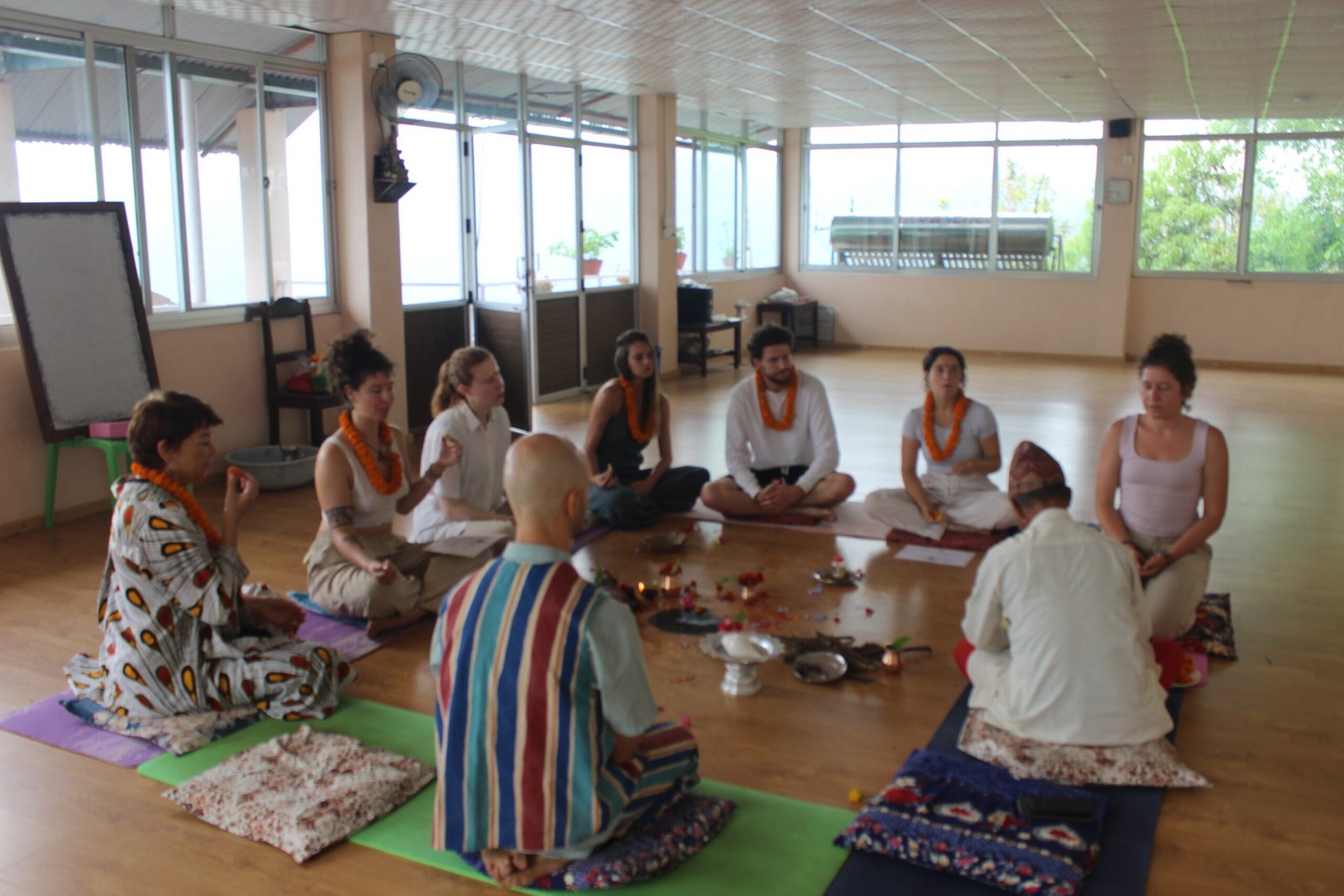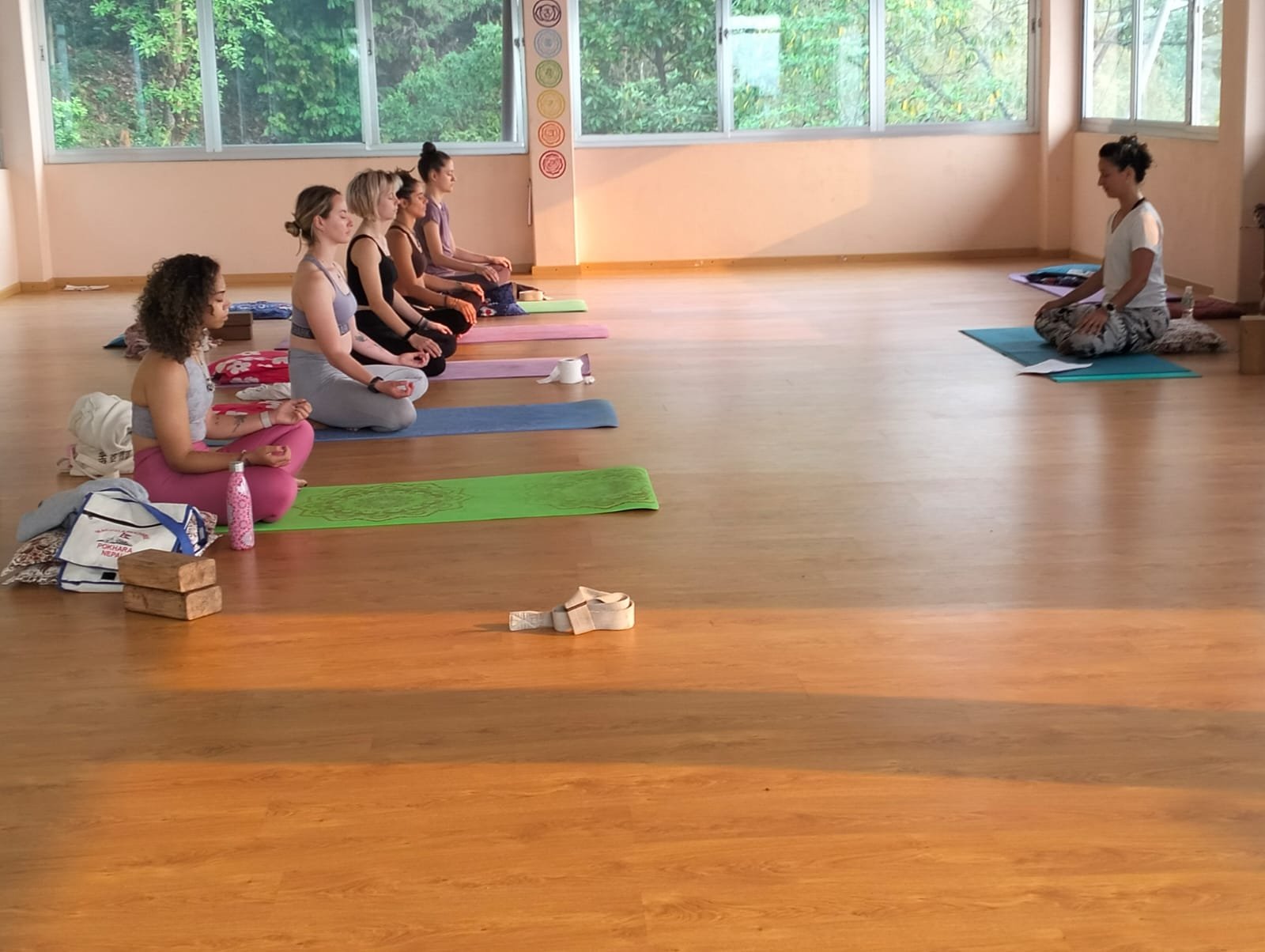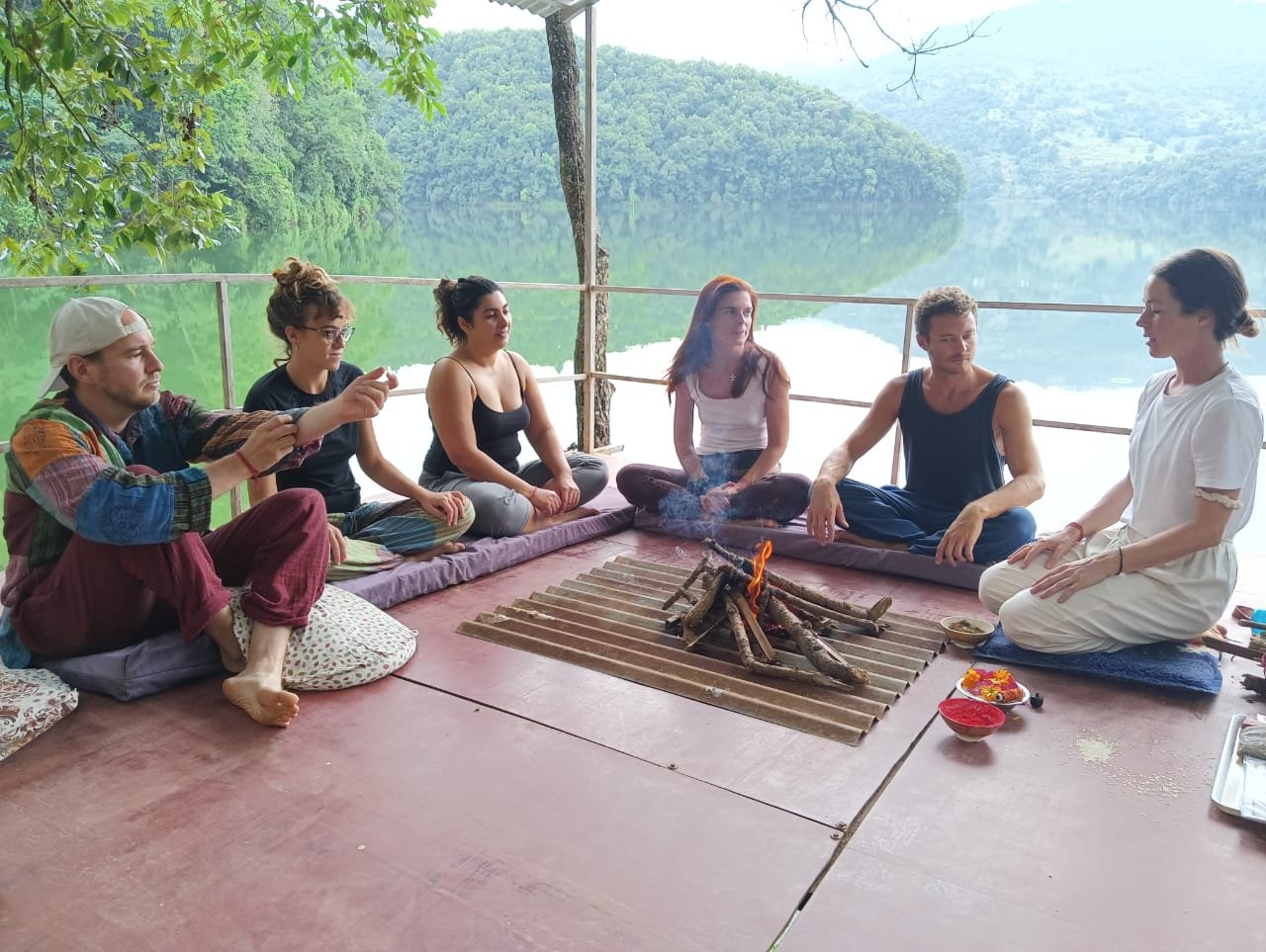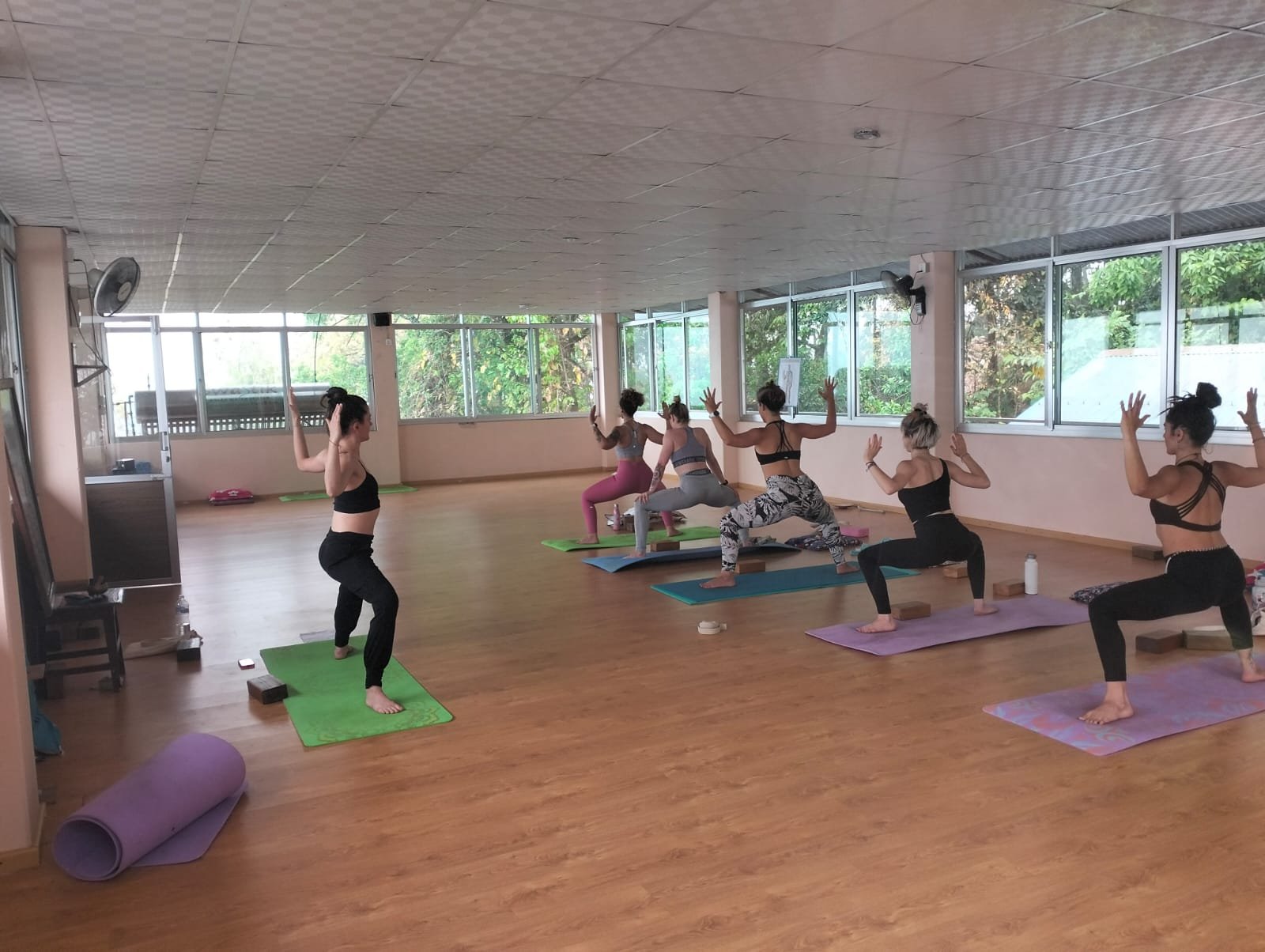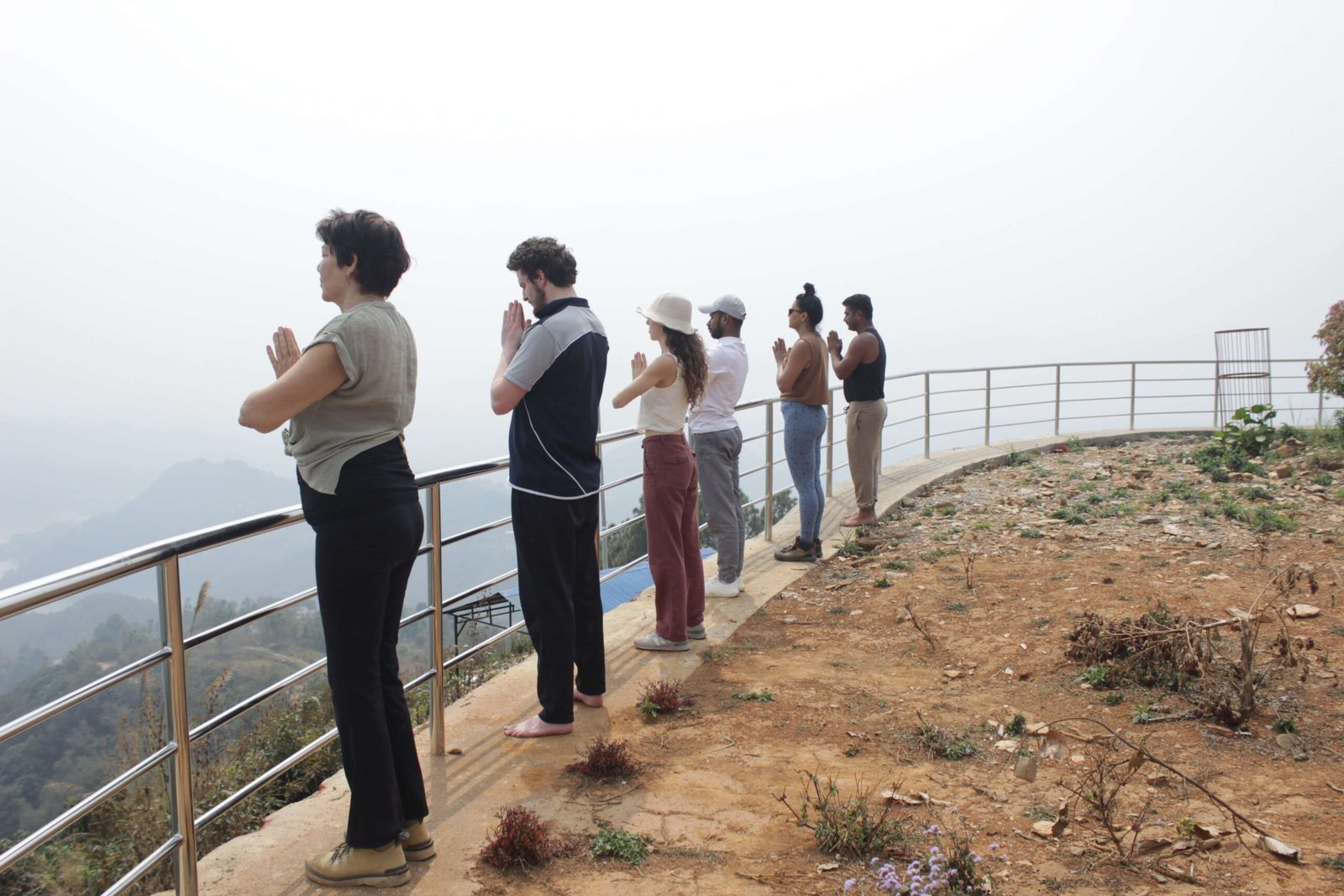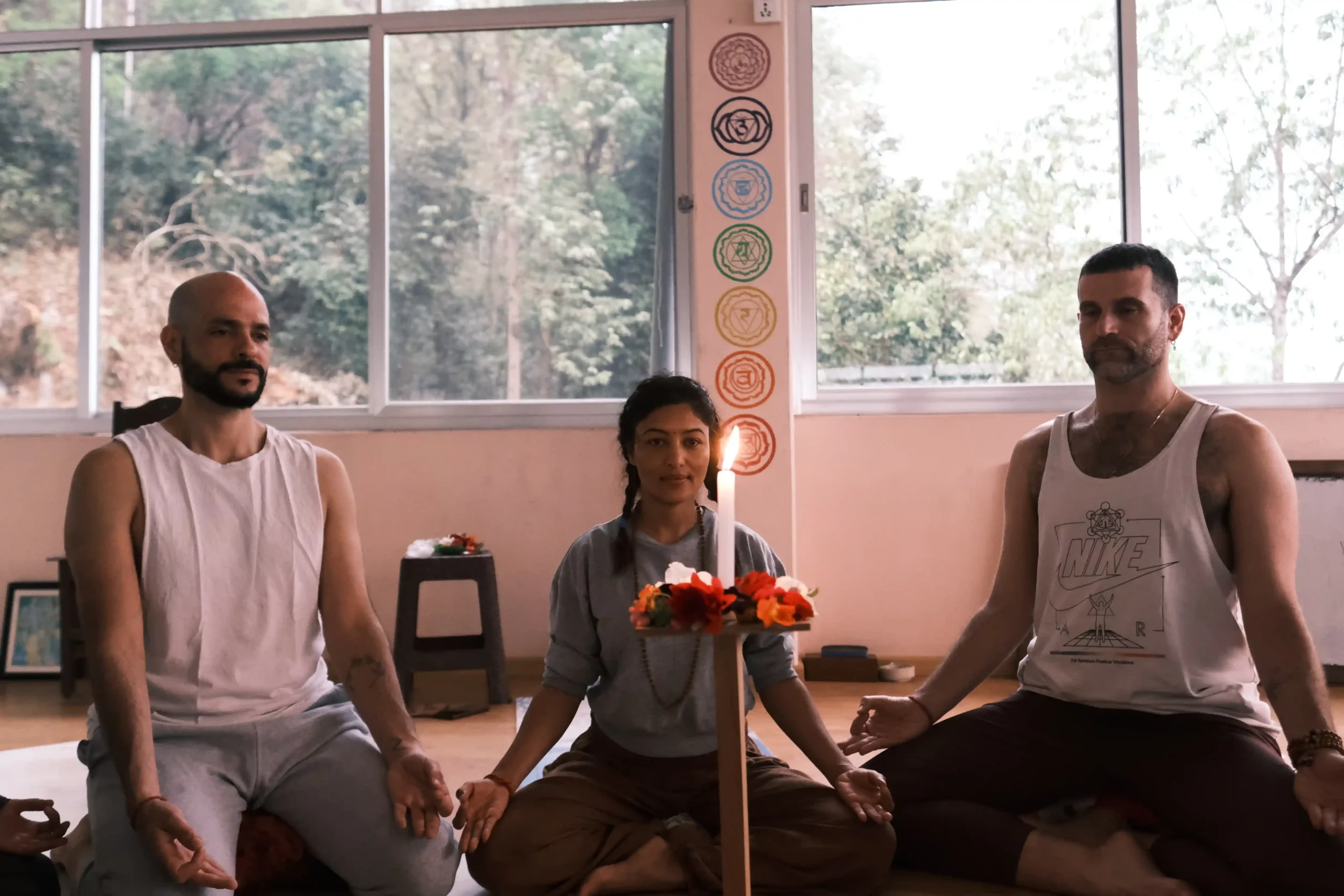

Most students practice yoga for 2 to 4 hours a day during teacher training programs. The full training day is longer, usually 6 to 10 hours because it also includes theory, anatomy, and teaching practice sessions.
Part time courses ask for far less, often 1 to 2 hours on a training day.
So the honest answer depends upon the format of training you pick. Here is how a day’s practice hours usually break down.
What Does a Typical Daily Yoga Teacher Training Schedule Look Like?
A full-time yoga teacher training schedule starts early in the morning and ends in the late afternoon. Here is a sample tabular format activity timesheet for a residential 200 hour yoga teacher training.
| Time | Activity |
| 06:00 AM | Pranayama and meditation practice |
| 07:30 AM | Asanas practice (physical) |
| 09:30 AM | Rest & breakfast |
| 10:30 AM | Yoga philosophy or anatomy classes |
| 12:30 PM | Sattvic lunch |
| 02:00 PM | Teaching practice and alignment workshop |
| 04:30 PM | Light yin yoga or yoga nidra |
| 06:00 PM | Dinner, then self study |
Note: Only about third of the day is physical movement, the rest is sitting, listening and learning how to teach yoga.
Do 200, 300 and 500-Hour Programs Have Different Daily Schedules?
Yes, but the change comes from the course length, not the daily hours. Most intensive programs run 6 to 8 hours a day whatever the level.
What changes is how many weeks you spend and how deep the content goes:
| Program | Length | TIme |
| 200 Hour Yoga Teacher Training | 3 to 4 weeks | 6 to 8 hours a day |
| 300-hour Yoga Teacher Training | 4 to 6 weeks | 6 to 8 hours |
| 500 Hr Yoga Teacher Training | 8 to 12 weeks | 6 to 8 hours, often with rest day |
Advanced programs also lean more on advanced asana, adjustments, and sequencing, so the practice feels harder even when the hour looks the same.
Most yoga schools in Pokhara follow yoga alliance standards, which set the total hours but leave the daily layout schedule to each school.
Do You Need to Practice the Same Schedule Every Day?
The simple answer is no. Good yoga programs change the load from day to day. Your body needs time to adapt, and a fixed routine usually leads to sore joints and low energy by week two.
So, What to expect:
- Rest day per week: Full-time courses generally mean one day off or a half day.
- More gentle stretches: Often we need a little less release and more gentle stretching.
- Less moving around during theory intensive days: Days dedicated to teaching techniques and anatomy.
- Flexible formats: Online yoga teacher training and weekend sessions allow you to learn at your own pace.
Tip: Missing one class is rarely a problem but missing several can mean extra sessions and extra hours, so tell your teacher in advance.
How Can You Plan Your Daily Schedule Efficiently?
A little routine plan can help you from burning out. These habits helps most to make your yoga schedule more efficient:
- Sleep early: 7 to 8 hours ideally. Waking up early in the morning is hard on a lethargic body.
- Eat Light: Enjoy a light snack before class, but leave at least 2 hours after a meal before asana practice.
- Utilize time gaps: Taking fifteen minutes to review notes after each class will spare you hours during exam preparation.
- Practice Your teaching: Prepare your sequences in advance, and write down short sequences, on the night before your practice teaching.
- Save some extra time: Save one peaceful hour. Walk, write or sleep. It prevents overstrain.
Final Verdict
Teacher training programs are not very simple either. You have to give time and effort to enhance your practice and knowledge. The more you learn and spend time doing practice the better your confidence builds. A little effort today can forge your dream to become a successful yoga instructor.
Yet do not make it too hard on yourself, enjoy the learning phase and take you time to adapt so at the end of it you do not leave with any regrets.